Rainbow Music Note Patterns: A Versatile Design Resource for Creative Professionals
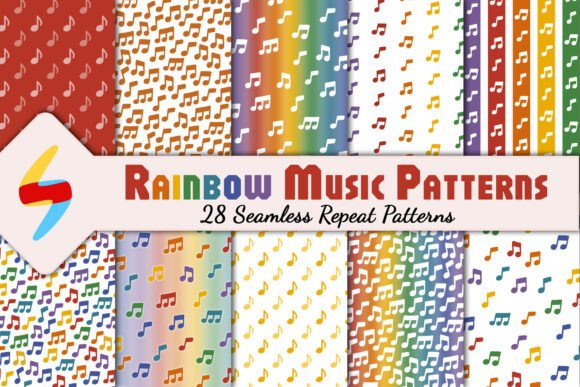
For those who appreciate the fusion of art and music, the Rainbow Music Note Patterns collection offers a compelling solution to elevate design projects with vibrant, thematic visual elements. This resource is particularly valuable for individuals working in creative fields where aesthetics play a central role—such as graphic design, event planning, education, and digital publishing. The collection comprises 28 high-resolution seamless repeat patterns, each featuring colorful musical notes set against bold or gradient backgrounds. These designs are ideal for anyone looking to incorporate both rhythm and radiance into their work.
Understanding the Rainbow Music Note Pattern Collection
The Rainbow Music Note Patterns are crafted with attention to detail and usability in mind. Each pattern is designed to seamlessly tile without visible breaks, making them suitable for a wide range of applications. The inclusion of gradients and dynamic color transitions adds depth and modern appeal, ensuring that the patterns can adapt to various design styles—from playful and whimsical to sophisticated and elegant.
What stands out about this collection is its thematic consistency. Every pattern centers around musical notes rendered in a rainbow palette, allowing users to maintain a cohesive look across multiple design pieces while still benefiting from diversity in layout and style. This makes it especially useful for branding efforts centered on music or inclusivity, such as Pride events, school recitals, or community celebrations.
Key Features and Benefits
- High Resolution: Each pattern is provided at 4000x4000 pixels and 300 DPI, ensuring clarity and crispness even when printed at large sizes.
- Seamless Tiling: The patterns are carefully constructed to repeat without interruption, reducing the need for manual adjustments during use.
- Bonus Photoshop PAT File: Included is a .PAT file that streamlines the application process within Adobe Photoshop, offering convenience for designers who frequently use pattern overlays.
- Versatile Applications: From digital scrapbooking to physical posters, these patterns are compatible with numerous mediums and platforms.
This level of quality and thoughtfulness is evident in the final output. Whether you're designing a classroom wall mural or a digital background for an online portfolio, the Rainbow Music Note Patterns provide a reliable foundation that enhances your project's visual impact without overwhelming its content.
Who Can Benefit from Using These Patterns?
The target audience for this collection spans several professional and personal domains. Educators, especially those involved in music programs, will find these patterns incredibly useful for creating engaging classroom materials, certificates, or themed calendars. Similarly, event planners and party organizers can utilize them for invitations, banners, and décor that align with either a musical or celebratory theme.
Entrepreneurs and freelancers in the creative industry—particularly those who offer printables, digital paper products, or custom merchandise—will appreciate the flexibility of these designs. For instance, a small business owner selling concert-themed stickers could easily integrate one of these patterns to create eye-catching packaging or product labels. Bloggers and publishers might also benefit by using the patterns to enhance articles related to music festivals, LGBTQ+ awareness, or arts education.
Moreover, crafters and hobbyists involved in sublimation printing, card-making, or scrapbooking will find the collection’s variety appealing. The ability to apply these patterns across different substrates and surfaces makes them adaptable for both personal and commercial crafting endeavors.
Real-World Use Cases and Performance
In practical terms, the Rainbow Music Note Patterns have been tested in several real-world scenarios. One example involves a teacher who used a pattern as part of a bulletin board design for a school music week. The result was a visually stimulating environment that resonated well with students and parents alike. Another case saw a wedding planner repurpose a subtle gradient version of the pattern for a music-lovers’ themed shower invitation, achieving a balance between elegance and fun.
From a technical standpoint, the 4000x4000 resolution and 300 DPI ensure that the patterns remain sharp and clear whether viewed digitally or printed. They perform exceptionally well in both vector-based and raster workflows, though they are delivered in JPG format, which may be a limitation for users requiring transparent backgrounds or layered files. However, the bonus Photoshop PAT file compensates for this by enabling quick and easy application as overlays or fills.
Users have noted that the patterns are highly effective when used as accents rather than dominant features. Placing them behind text or images helps avoid visual clutter while still adding a sense of movement and energy. For instance, in digital scrapbooking, applying a soft gradient note pattern as a background allows written memories to stand out more clearly, maintaining readability while enhancing the overall aesthetic.
Evaluating Quality and Long-Term Value
Design resources like the Rainbow Music Note Patterns are only as valuable as their durability and adaptability. Upon evaluation, these patterns demonstrate a strong level of craftsmanship. The colors are consistent across all 28 designs, and the repetition does not compromise the artistic integrity of any individual piece. This is crucial for designers who rely on pattern libraries to maintain a professional appearance over time.
Long-term value is another key consideration. As trends evolve, having access to a library of reusable, high-quality patterns can save significant time and effort. These patterns are timeless in their celebration of music and inclusivity, which means they won’t become obsolete quickly. Their broad applicability ensures they can be integrated into future projects, even as the initial ones age or change context.
Usability and Flexibility in Workflow
One of the most notable aspects of this collection is its ease of integration into existing design workflows. The JPG format is widely supported, and the additional Photoshop PAT file simplifies repetitive tasks. For users who prefer alternative software like Canva or Procreate, the patterns can be imported and applied with minimal hassle, thanks to their clean edges and non-intrusive design.
However, there are some limitations worth considering. While the JPG format is excellent for print and web use, it lacks transparency layers, which may restrict how it can be overlaid on other images or textures. Additionally, since the collection includes only pre-designed patterns, users seeking fully customizable options might need to modify them further using image editing tools. Despite these constraints, the patterns remain a powerful starting point for many creative needs.
Strengths and Practical Considerations
The Rainbow Music Note Patterns shine in environments where thematic design is essential. Their bold colors and rhythmic composition make them ideal for capturing attention in promotional materials, such as flyers for concerts or workshops. The collection is also beneficial for creating digital assets that require scalability—like social media graphics, email headers, or website banners—without losing detail or vibrancy.
A strength of the collection is its ability to cater to both novice and experienced designers. Beginners can use the patterns as-is to add flair to simple projects, while professionals can layer them creatively to build complex compositions. For example, combining two different note patterns—one in solid colors and another in gradients—can generate a rich, multi-dimensional backdrop that feels unique yet cohesive.
Another factor to consider is the emotional resonance of the patterns. Music and rainbows are universally recognized symbols of joy and creativity, making these designs inherently uplifting. This psychological impact can be leveraged in marketing materials to evoke positive associations with a brand or event.
When It Might Not Be the Best Fit
While the Rainbow Music Note Patterns are versatile, they may not suit every design context. Projects that require minimalism or a very specific cultural tone might find the patterns too vibrant or thematic. In such cases, opting for a subtler variation or limiting the pattern's use to smaller accents would be advisable.
Additionally, if a designer is looking for something completely original, they may need to invest extra time in tweaking or blending the patterns with other elements. The collection excels as a ready-to-use toolkit but doesn’t replace the need for personalized design touches in all cases.
Final Thoughts and Recommendations
Overall, the Rainbow Music Note Patterns serve as a practical and inspiring addition to any designer’s asset library. They are particularly suited for those who work in educational, event-based, or community-driven contexts where themes of music and positivity are relevant. The combination of high resolution, seamless tiling, and thematic richness provides a solid return on investment for both casual creators and professionals.
If you’re someone who regularly incorporates music-related visuals into your work or enjoys experimenting with color and texture, this collection is worth exploring. Just be sure to evaluate how well it aligns with your current design goals and workflow before integrating it into larger projects. With thoughtful application, the Rainbow Music Note Patterns can bring both harmony and visual interest to your next creative endeavor.